How To Play All Of The Chords On The Piano
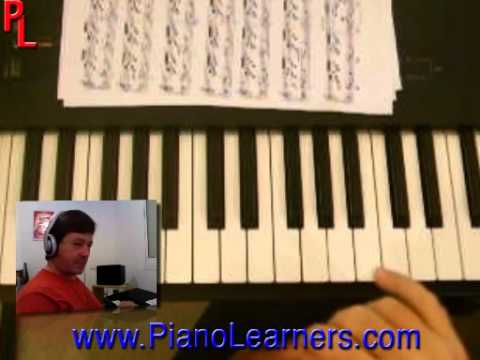
Here is another quick video I made… This one shows you ALL of the major and minor chords and should enable you to play virtually any song you like.
Reviewer: Andy Penbram
Rating:![]()
Website Reviewed: Piano for All
This is one of my favorite home study piano programs. It is not as slick looking as some of it’s competitors (Rocket Piano) but it has its own special character and on the whole I really like the way that the whole course is planned to guide the student through the learning process.
What You Get
The course consists of ten hefty work books in a printable pdf format, 200 video lessons and 500 audio lessons. No fancy software here but the lessons are top quality and extremely well planned out.
Visit The Piano For All Web Site
The Unique Learning Process
This course is a little different from the others in that it teaches you how to play by ear, how to use chord charts and how to read music all at the same time right from the absolute basic level.
Here is a Video Review showing you what you get when you purchase
The Books
The first book is called Party Time – Rhythm Style Piano. This starts you off assuming you have no musical knowledge at all and have never touched a piano before. It teaches you how to find the notes on the keyboards, and by
means of simple diagrams it shows you how to place your fingers and has you playing simple melodies straight away. It then shows you how to recognize the notes you have learned on the musical staff. Then as you advance you get shown some chords. The whole basis of this book is to play like a pianist with real rhythms. You are taught how to play basic chords but also how to use them with authentic rhythms using both hands. The results sound reall
y great. The best thing about it is that as you progress you also get taught how to read music… little by little until before you realize it you discover that you are able to play by ear and read music or chord symbols.
Once you have learned the basic principle of these books, t
he rhythm method for want of a better name you can then progress onto the more advanced books.
There is the Blues book where you learn beginners blues patterns and riffs.
The next book is
called Chord Magic. This teaches you how to play the basic chords in different inversions and how to combine them in chord sequences with rhythm that is really superb and has you sounding like a seasoned pianist.
This is then followed by the Advanced Chords book.
By the time you get to the next book, Ballad Style you are really playing like a professional. In this book you learn how to take a melody and improvise around it giving a ballad style to your playing.
The final book is Jazz Piano Made Easy. This is just that, it de-mystifies jazz playing and with some quite simple chord progressions and runs you will be playing authentic sounding Jazz pieces in no time at all.
Each book contains audio and video clips which you can simply click on and they open right there.

The Negatives
The most annoying thing about this course is that the teaching material is all traditional songs and melodies. This is due to the copyright laws prohibiting them from using protected material which leaves only the traditional and anonymous compositions.
The Positives
The whole way of learning using basic chords combined with rhythms has you playing authentic sounding piano right from the start. You can easily start this course if you are at an intermediate level too as it progresses up to quite an advanced level at the end.
The absolute best thing about this course is that it has you playing great sounding piano from the start and enables you to advance extremely quickly.
To Help You Decide
To help you make up your mind you can download a sample page so you can see how the course is laid out and how it works. There is also a 60 day money back guarantee in case you are not entirely convinced. For more information see the Teach Yourself Piano Page.
Conclusion
This course I give a definite five star rating. It is my personal favorite and although the look of the books is not as slick as some of the other courses the content, material and teaching method is superb.
Learning How to Create Basic Piano ChordsThe basic piano chords are going to be very important to you in learning to play the piano. When you learn to understand chords you will be better able to read music and understand how to play the piano much easier.
Construction of Chords
Chords are made from musical intervals. A chord is composed of three parts. They are the root note, which gives you the name of the chord, a Major third or minor third and a Perfect fifth, Augmented fifth or a diminished fifth.
A Major chord has a root, Major third and Perfect fifth. A minor chord has a root, minor third and Perfect fifth. An Augmented chord has a root, Major third and Augmented fifth. A diminished chord has a root, minor third and diminished fifth.
For Slightly More Advanced Chords Click Here
Making a Chord
Now that you know the basic construction of each type of chord, you can being to create a chord. Major chords are the easiest to create. Simply choose any note as the root note. Now you choose the Major third, which is simply three notes from the root note. Now finish the chord with a Perfect fifth note which is five notes from the root note. An example would be a D chord. D is the root, F is the Major third and A is the Perfect fifth.
As you move into minor chords, diminished and augmented chords the notes you will use will include not only the white keys, but the black keys on your keyboard. It is simplest to start learning chords with the Major chords. For more information check out the Piano Basics page.
Playing Around with a Chord
Most of the time you will be playing a chord with all three notes together. Using our example, a D chord, you would play D, F and A together to form the chord. However, when you start looking at how chords are used in music you will see that they are not always played together. Sometimes you may just use two of the notes or you may play the notes separately.
You can play around with a chord to see all the different ways that you can use the notes within the chord together and separately to create a nice sound. Chords are usually used in the bass clef and played with the left hand, but they can also be use din the treble clef and played with the right hand. Try playing chords with both hands and experimenting to see what you can do with chords.
The Importance of Chords
Have you ever been listening to someone play the piano and they strike a note that doesn’t seem to sound right? Part of the importance of chords is helping you to see how the notes harmonize or go together. This is especially important for you if you are trying to learn to write your own music.
Professional Piano Chords For Everyday Pianists
You can use chords in many ways to create many wonderful songs on the piano. Through understanding the basic piano chords you can begin to see how music is written and become a song writer yourself.
Learning to Play the Piano by EarSome people have a natural musical inclination to play almost any instrument by listening to a particular song and transferring this sound to notes or chords. This is referred to as playing by ear. The average person cannot remember the exact scale of sound in a tune and this ability is unique.
If you feel that you possess such a talent, learning the basic scales could be very helpful in expanding your piano playing experience. A scale on the piano is comprised within a set of musical notes in any given octave. Octaves ascend and descend from the middle of the keyboard and define higher or lower pitches. Instead of laying your hands on the keys and fishing for the right combination, you will know for sure when first hearing the chord, where this chord lies on the piano.
Check Out the Piano For All Home Study Course
Notes will still need to be learned but this is not much more difficult than learning your basic ABCs, perhaps even easier because the notes on a piano only range from A-G. These keys are always white and the black keys represent the ½ steps. When a combination of the white and black keys is struck in a certain uniform arrangement, a scale is delivered.
With a natural skill for playing music by ear, learning the scales should not be difficult. Reading music may be more of a challenge but by understanding and learning the basic steps of scales and chords, your ability to read music as well as play by ear will make you sound like a pro in no time. When you are able to read music, you will find yourself automatically grouping notes together into scales and this is great since scales is what most music is based upon.
Playing by ear can be an advantage to the beginning piano player with other tools at their disposal. If you have already mastered another type of instrument through self-taught scales, learning the piano will be a piece of cake. Another trait of many that play by ear is the natural way that songwriting can be produced once the piano basics have been learned.
Listen to a song. Does the combination of notes stay in your mind as a blended effort or do you just recognize a good sound? If you are a master at blending and transferring without much effort, you can probably play by ear and should learn to play the piano to further your passion. Creating a certain rhythm comes next in the learning process. This may come easily or need practice to perfect. Simple keystroke exercises are readily available for any type of musical style that you like and to strengthen areas that may be weak. You may even come up with melodies of your own while practicing different, harmonic scales. See the Piano Lessons For Beginners page for more info.
Go To The Piano For All Web Site
To learn piano by ear and by reading music is by far the best as you are open to all posibilities and yet not restricted by having to play exactly what is written the page.
Reviewer: Barry Bushnel
Rating:![]()
Website Reviewed: Professional Piano Chords

This is a product aimed at those who are already playing the piano at a basic or intermediate level. It is a guide on how to make the chords you play sound more luscious.
This is a single book in pdf printable format. It has been put together by professional pianist and teacher Bill Romer. The whole idea of this product is that when you are learning to play the piano, especially if you are self taught, you learn some basic chords. These chords just don’t give you that professional pianist sound. This is where this book comes in. It will teach you loads of rich sounding chords and chord progressions you can use to make your playing sound better.
Go to the Professional Piano Chords Web Site
In order to use this course you need to be able to read a simple melody in the treble clef. The lessons border on teaching you improvisation and they show how to put wonderful rich sounding chord progressions on top of the simple melodies. After you get the hang of how this works, which will be very quick, you can start to use the chords and progressions you have learned in many different types of music. For more information check out the Piano Basics page.
The majority of the chords are thick jazz chords including sevenths, ninths, thirteenths etc. They all use their many inversions, Sometimes when playing one chord in a certain inversion you can then play another totally different chord with an added seventh or ninth in a different inversion and of maybe four notes played you might only have to change one. This technique serves to keep the harmony moving and appropriate by the piano will continue to sound full and mysterious.
The guide is very compact having 60 pages but the content is thick and there is a lot to get through. It comes with a separate chord chart which shows you by way of diagrams how to play the chords (no need to know how to read music)
The best thing about this product is that it only costs $27. There is also a 60 day money back guarantee.
Go to the Professional Piano Chords Web Site